Flamenco Dance Classes in Gloucester
Flamenco Gloucester
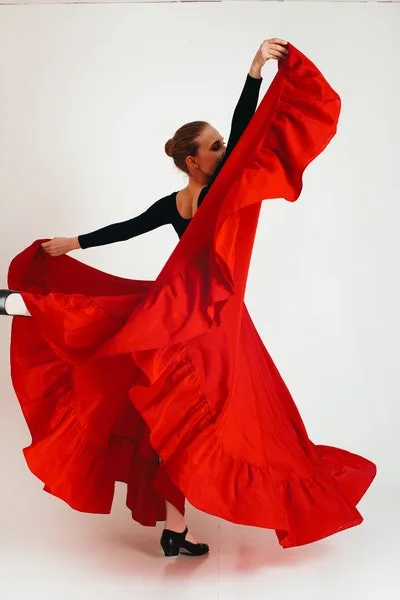 Flamenco — Gloucester
Class is coming soon
Fill out the form for more info
Class Details
Location: TBC
Day: TBC
Time: TBC
Age Group: 17 – 75
Teacher: —
Class Structure
Beginners Class — 60 Minutes
Posture & Braceo
Standing tall through the spine, then the slow shaping of the arms and hands - braceo and floreo. Flamenco starts from a proud, grounded frame, so we set that before the feet get involved at all.
Palmas & Compas
Clapping the rhythm - palmas - and counting the twelve-beat compas that underpins the classic palos. You learn to feel where the accents land well before you dance to them.
Footwork - Zapateado
Building the footwork vocabulary: golpe, planta, tacon and the heel-toe drills that give flamenco its percussion. Slow and clean first, real speed much later on.
Putting It Together
Joining arms, hands and feet into a short marcaje sequence inside the compas - the moment it genuinely starts to look and sound like flamenco.
Cool Down
Stretching the calves, ankles and shoulders that have done all the work, and clapping out one last rhythm together as a group.
About Flamenco Classes in Gloucester
Flamenco is southern Spain's great art of rhythm, footwork and fierce composure - hammering zapateado, sculpted braceo arms and the twelve-beat compas that holds everything together. Our Gloucester classes teach the technique patiently and from the ground up, so a complete beginner can feel the pull of the rhythm and the pride of the posture from the very first session.
We want to be straight with you about the scene: Gloucester has no resident tablao, and live flamenco here tends to arrive as the occasional touring show rather than a nightly fixture. What the city genuinely does have is a proper instructor-led technique class - somewhere to actually learn the footwork and the compas rather than only ever watch them. Think of this as building the craft, with the performances a bonus you seek out when they tour through the region.
You need no Spanish, no rhythm you were supposedly born with and no dance history whatsoever - palmas and counting are taught entirely from scratch. Wear something fitted at the waist so your posture stays visible, and shoes with a small, solid heel if you have them; hard-soled shoes work fine to start, and proper flamenco shoes can come along later. Expect to clap, count and stamp, and to leave with the rhythm still ticking in your head.
Browse all 20 of our dance classes in Gloucester, book a flamenco hen party for a one-off group session, or see flamenco classes in our other 66 cities.
Fill Out the Form for More Info
Fill in your details for up-to-date class info.
Why Choose Flamenco in Gloucester?
Rhythm You Can Feel
Palmas and compas train a genuine sense of timing that carries into every other style and, members say, into how they hear music altogether from then on.
Percussive Footwork
Zapateado builds fast, articulate, powerful feet along with seriously strong calves and ankles - a demanding workout cleverly disguised as an art form.
Posture & Presence
The upright, proud carriage of flamenco quietly reshapes how you stand and hold yourself, well beyond the studio door and into ordinary life.
Expressive Arms & Hands
Braceo and floreo - the slow arms and the circling wrists - give you a graceful upper body that balances and offsets the fire of the feet.
Your Flamenco Journey
From first class to confident dancer — here is how it usually goes.
Rhythm & Frame
Getting Started
You learn the flamenco posture, the basic arm shapes and how to clap and count a simple compas. The feet stay simple while the rhythm goes into your hands and ears first.
What to Wear
A fitted top or something belted at the waist, a skirt if you like the feel of it moving, and shoes with a small solid heel. Hard-soled shoes are perfectly fine to begin with.
Feet & Timing
Developing Technique
The core footwork - golpe, planta, tacon - drilled slowly and cleanly, then set inside the compas so foot and rhythm start to lock together as one.
Understanding Palos
Meeting the main flamenco forms and their moods - the differing weight of a solea against a lighter, faster palo - so the dancing carries context, not just counts.
Marcaje & Escobilla
Longer Sequences
Linking marcaje and a short escobilla - the footwork showcase - into a phrase that holds the compas at a steadier tempo. Speed and clarity are grown side by side.
Arms Meet Feet
Coordinating braceo, hand floreo and footwork all at once, which is the real technical leap and precisely where flamenco finally clicks into place.
Dancing With Duende
Bringing It Together
Performing a complete short piece with control, attack and feeling - the elusive duende that turns technique into actual flamenco. Optional showcase spots for anyone who wants them.
Where Next
Keep refining footwork and speed, explore castanets or bata de cola work, and catch touring flamenco whenever it reaches this part of the country.
Flamenco in Gloucester FAQ
Everything you need to know before your first class.
Is there a flamenco scene or tablao in Gloucester? +
Honestly, no resident tablao - Gloucester does not have a nightly flamenco venue, and live shows here are occasional touring dates. What we offer is the thing that is genuinely missing: a proper class to learn the technique, week in and week out.
Can I start flamenco as a complete beginner? +
Yes, and most of our dancers do exactly that. We teach posture, palmas, counting and footwork entirely from scratch, slowly, with no assumption that you have ever danced or clapped in rhythm before.
Do I need special flamenco shoes? +
Not to begin with. Any shoe with a small, solid heel and a hard sole will do for your first classes. Proper nailed flamenco shoes make the footwork louder and cleaner, but they are an upgrade for later, never a barrier to starting.
Will I have to sing or speak Spanish? +
No. The dance is taught in English; you will pick up a handful of Spanish names for the steps and rhythms, but there is no singing and no language requirement to take part.
How physical is a flamenco class? +
More than it looks from the outside. The footwork is genuine cardio and a calf workout, and holding the posture engages the core throughout. You will certainly feel it in your legs the next day.
What is compas? +
Compas is flamenco's rhythmic cycle - most famously a twelve-beat pattern with accents in particular places. Learning to feel and clap it is the foundation everything else is built upon, which is exactly why we start there.
How much is a class in Gloucester? +
£8 per session, paid as a drop-in on the day, with no membership or commitment attached. Come as often or as rarely as your week allows.
Where are the classes held? +
At a central Gloucester studio with a hard floor that lets the footwork sound properly, close to the bus station and city-centre parking. The exact venue is confirmed when you book.
Is flamenco good if I dance other styles? +
Very. The rhythmic training, footwork clarity and posture carry straight into tap, ballroom and contemporary, and the sheer musicality it builds improves nearly everything else you do.