Tango Dance Classes in Durham
Tango Durham
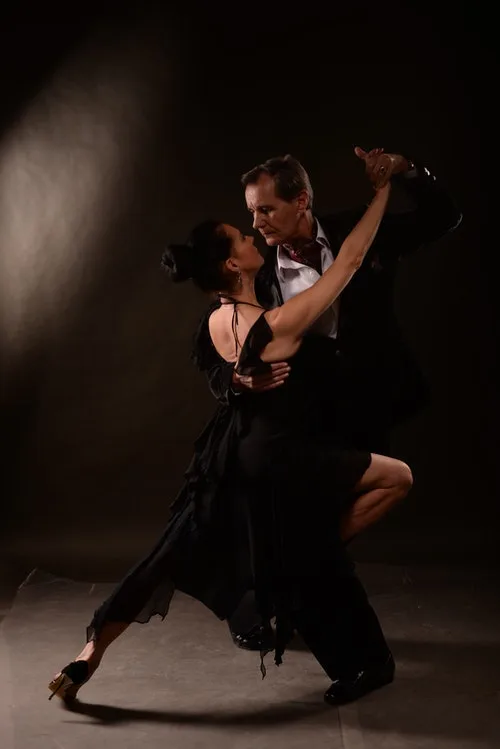 Tango — Durham
Class is coming soon
Fill out the form for more info
Class Details
Location: TBC
Day: TBC
Time: TBC
Age Group: 17 – 75
Teacher: —
Class Structure
Beginners Class — 60 Minutes
Warm-Up & Walking
Walking the tango stride, plus axis and balance work, to settle into the low, deliberate quality the whole dance rests on.
Technique & Figures
The cross, the ochos, giros and a first sacada — the moving parts of the dance, always tied back to the lead-follow feel and to the song.
Partnership Practice
Taking the figures to a partner, tidying the hold, feeling how weight passes between two people and reading the quiet back-and-forth of leading and following.
Improvisation & Navigation
Dancing whole tracks with nothing set — steering a line around the floor, answering what the music does and building from the moves you already know.
Practica & Cool-Down
Free practice minutes with the music on, then easy stretches through the calves, lower back and hips.
About Tango Classes in Durham
Argentine tango is an unusually close social dance made from improvisation and a silent understanding between two people wrapped in a shared embrace. Across our Durham sessions you learn the walk, the musicality and the partnering of milonguero-style tango — the cross, the ochos, giros and the small transfers of weight that let a couple travel as one with nothing rehearsed. Each move is simply a reply to the song and to the person you hold.
We should be honest about the local picture: Durham City has no resident weekly milonga of its own right now, so the regular social nights sit out in the wider region and dancers travel to them. That makes a good weekly class all the more valuable — it becomes the settled home where the craft is actually built, paced for adults who want to learn it properly with no shortcuts. We run from a central Durham studio with a smooth floor, drawing dancers from Elvet, Gilesgate and out across County Durham.
There is no need to bring a partner — we swap around through the class — and no dance background is expected; the walk is the way in, and the rest grows out of it. Shoes with a smooth sole make pivoting easier, and the music has a habit of trailing you home. Explore all 20 of our <a href="dance-classes-in-durham.html">dance classes in Durham</a>, or look through our <a href="hen-party-dance-class-durham.html">hen party themes</a> for a one-off group session.
Browse all 20 of our dance classes in Durham, or see tango classes in our other 66 cities.
Fill Out the Form for More Info
Fill in your details for up-to-date class info.
Why Choose Tango in Durham?
Deep Connection
No other social dance is this close; it runs entirely on a wordless exchange between two people, and it quietly teaches you to listen, to trust and to stay present.
Pure Improvisation
Where other dances are set in advance, each tango is made up as it happens; you gather a kit of movements and piece them together on the fly, led by the music.
A Rich Musical World
Tango music, from Piazzolla back to Pugliese, is some of the most emotionally intricate in all of dance. Learning to hear it and reply to it reshapes the way you move.
Walking as an Art
The tango walk underpins everything. Learning to move with intent, connection and musicality genuinely changes how you carry yourself away from the floor too.
Your Tango Journey
From first class to confident dancer — here is how it usually goes.
The Walk
Getting Started
The tango walk — ahead, behind and to the side. Locating your own axis, meeting the embrace, and learning to send a clear intention with the body rather than the mouth.
What to Wear
Easy clothing and a smooth sole — think leather-bottomed or proper dance shoes. Steer off grippy rubber that stops a pivot dead. Followers can wear a heel if they like, but it is never required.
Gathering Figures
Core Figures
Ochos to the front and back, the cross system and a first turning giro. Figures begin to string into short runs driven by the song and the hold, never by rote.
Embrace & Connection
Settling into the close embrace — chest to chest, a shared axis, breath in sync — and grasping that tango is something felt far more than something watched.
Musical Dancing
Improvisation
Whole tracks with nothing pre-planned — catching the phrasing, the pauses and the accents in the music and letting them steer you as you share the floor with other couples.
Social Readiness
Ready to travel out to a regional milonga and join in, comfortable with its etiquette — the cabeceo glance, the tanda sets and the cortina breaks — and feeling you belong.
Milonguero
Advanced Musicality
Riding orchestras of very different temper — lyrical, driving, dramatic — and folding in sacadas, barridas, volcadas and richer giros. Tango simply never runs out of things to show you.
What Comes Next
Travel to milongas around the region and further afield, take on the faster tango vals and milonga styles, hit festivals, or add salsa or bachata as a social complement.
Tango in Durham FAQ
Everything you need to know before your first class.
What is Argentine tango? +
It is an improvised partner dance out of Buenos Aires, held in a close embrace and danced to the old tango orchestras. Where ballroom tango is set, this is invented as you go — the leader chooses the path and the follower answers through the embrace. Few social dances anywhere are as close, or as musically deep.
Must I bring a partner to tango? +
There is no need — partners change all the way through the class. Coming alone is completely usual, and working with a range of people is what really grows a strong lead and follow. Couples are just as welcome.
What do I wear for tango? +
Easy clothes and a smooth sole. Leather or suede undersides are best because they let you pivot, which tango asks for constantly. Give rubber-soled trainers a miss; followers may fancy a small heel, though flats do the job.
What do tango classes in Durham cost? +
Every class is a flat £8 as you go — no joining fee and no contract, so come along when it works for you. Block options arrive once the weekly timetable settles.
Is there a milonga in Durham I can go to? +
Honestly, Durham City has no resident weekly milonga at the moment, so the regular tango socials are out in the wider region and dancers travel to reach them. Our class is the steady weekly home that builds you up and prepares you to enjoy those nights when you get to one.
How does Argentine tango differ from ballroom? +
They are really quite different. The Argentine form is improvised, danced chest-to-chest and welded to the music; ballroom tango is choreographed, held in an open frame and worked from a fixed syllabus. What we teach is the Argentine one.
Can total beginners learn tango? +
Yes. Everything in tango opens from the walk — plain to look at, yet the deepest step there is. No earlier experience is asked for, the craft comes in by degrees, and the pace is set for grown-up beginners.
What music do you dance to in class? +
The classic Argentine orchestras — D'Arienzo and Troilo, Di Sarli and Pugliese, and Piazzolla. It is warm, aching and endlessly layered, and picking apart its shape is genuinely half of learning the dance.
Can I book private tango lessons? +
Yes — one-to-one or couple sessions can be arranged. They suit anyone wanting to go deeper into technique, get ready for an occasion, or iron out one particular corner of their dancing. Message us to fix a slot.