Tango Classes in Brighton
Tango Brighton
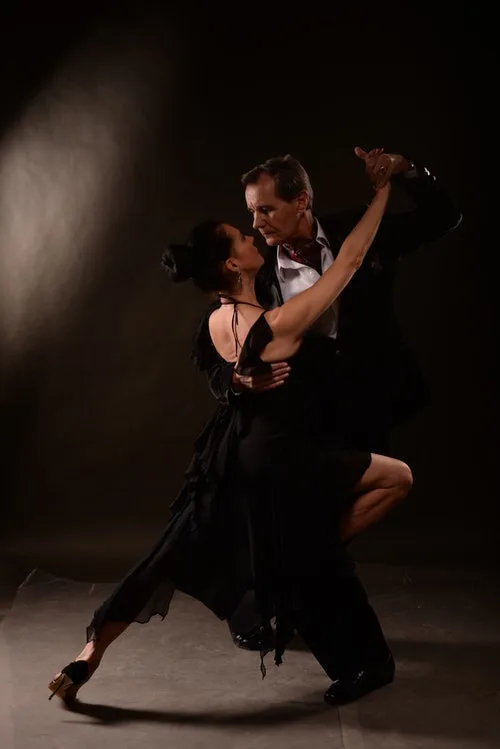 Tango — Brighton
Class is coming soon
Fill out the form for more info
Class Details
Location: TBC
Day: TBC
Time: TBC
Age Group: 17 – 75
Teacher: —
Class Structure
Beginners Class — 60 Minutes
It Starts With Walking
Tango is, at heart, a way of walking, so that is where we open — a gentle warm-up and unaccompanied walking to the music, teaching your weight to spill smoothly off one foot and settle onto the other.
The Hold
Next comes the close hold the dance is named after: how to stand, how to join, how to keep the frame yielding enough that neither dancer clutches, pulls or slumps.
Two Moving as One
Now the couple travels the line of dance side by side, one offering and the other replying — tango's whole hushed exchange pared back to its essentials.
First Turns
The pivoting ochos and a basic giro go in, the first shapes to escape the plain forward walk and register to the eye as dancing.
One Last Dance
A closing partner change to a whole tango, then a slow stretch — and you walk out holding the walk, the hold and a turn or two of your own.
About Tango Classes in Brighton
Mention tango and the picture that arrives is usually theatrical — a bloom clenched in the teeth, snapped heads, a dramatic drop on the last note. The beginners' floor is almost the opposite of that: unhurried, intimate, forgiving, and weighted far more toward listening than performing. The real thing you are cultivating is a kind of early-warning sense, reading a heartbeat ahead of time which way your partner means to move.
Since the dance is assembled on the spot from a modest set of ideas, no fixed routine sits waiting to desert you halfway through a track. Every step is a fleeting understanding struck between two people as the music lifts and falls, and that is exactly why coming alone presents no problem at all — both roles are on the syllabus, partners circulate all night, and no one takes it for granted that you have danced before.
A candid note on the local scene: tango dance classes in Brighton are the reliable element, whereas the milongas and practicas dotted around the city and the Sussex coast tend to surface and then slip away. That is precisely the argument for a steady weekly slot — one guaranteed hour keeping the dance under your skin — and your teacher will call out any social that merits the journey. The rooms are central, near North Laine and the Lanes, a short walk downhill from Brighton station.
Browse all 20 of our dance classes in Brighton, or see tango classes in our other 66 cities.
Fill Out the Form for More Info
Fill in your details for up-to-date class info.
Why Choose Tango in Brighton?
Come Without a Partner
Both roles feature in every lesson and partners circulate throughout, so a solo dancer is never sat out — arriving alone could not be more routine.
Nothing to Memorise
No routine can desert you, because tango is composed in the moment; what you develop instead is the feel for leading or answering a partner as it happens.
The Walk Is Everything
A tidy walk and a supple hold make up the whole base — master those and, given a little time, the turns tend to fall into place on their own.
A Fixed Point Each Week
With no milonga you can count on, one settled hour a week is the thing that actually keeps the walk, the hold and the turns alive in your legs.
Your Tango Journey
From first class to confident dancer — here is how it usually goes.
Nothing But Walking
The Opening Weeks
Walking in time and steadying your own balance before a partner ever joins you — the base every later piece rests on.
Dress and Footwear
Smart-casual you can move freely in and a slick sole for pivoting. Leather beats rubber on the floor; heels are welcome but never required.
The Connection
A Soft Frame
Holding the embrace gentle and truthful so a lead registers by feel rather than force — the ingredient that lifts steps into genuine tango.
Sampling Each Role
Taking a turn at both leading and following, which sharpens your read of the opposite part and improves whichever one you finally favour.
A Vocabulary
Ochos and the Giro
Ochos, pivots and the giro, threaded together as the music dictates rather than rehearsed as a set order to recite.
Dancing the Song
Shaping your movement to the phrasing — holding here, hurrying there, letting the orchestra set the outline.
Free to Improvise
On the Fly
Piecing a dance together in real time from all you have stored, untroubled that no two tracks ever run the same way.
Onward
A practica or milonga along the coast once one is worth the trip, or further work on embrace and musicality here in class.
Tango in Brighton FAQ
Everything you need to know before your first class.
Do I need to bring a partner for tango in Brighton? +
No. Both leading and following are taught and the entire class circulates, so joining on your own is completely normal — the hour is spent dancing with a rotating set of partners.
Where exactly do the Brighton tango classes run? +
Central studios by North Laine and the Lanes, a short walk downhill from Brighton station. After you book, the precise room and its parking arrive by email.
How much is a tango class in Brighton? +
£8 per class, with no membership and no commitment holding you. The moment a weekly night establishes itself at a studio, discounted blocks become available to anyone coming often.
Could I go to a milonga in Brighton? +
Milongas and practicas do run around Brighton and along the Sussex coast, but they appear and disappear rather than keeping a dependable weekly beat. That is the whole reason the class pays off, and your teacher will flag any social nearby that is worth the effort.
Is it too late in life to begin tango? +
Not by a long way. Tango is a stroll, not a dash, and its slow closeness fits any age — a lot of people come to it later exactly because it trades on sensitivity over athleticism.
What do I wear, and must I have heels? +
Smart-casual you can move in and a smooth sole for turning — leather outperforms rubber by some way. Heels are welcome yet entirely optional; balance and comfort count for far more.
Is Argentine tango difficult to pick up? +
It gives back what you put in. Nothing needs cramming, but the walk and the connection take time to sink in. For most people the earliest turns settle after a month or two of regular weekly classes.
Why take a class when there's no steady milonga? +
Because the class stands as the fixture itself. A dependable weekly hour keeps the walk, the hold and the turns in your legs, so when a practica or milonga does appear within reach, you can join it straight away.
Will I have to memorise a routine? +
No — that would contradict the whole nature of tango. Everything is improvised from a small pool of ideas, so there is nothing to forget; you learn to construct the dance in real time, which is far gentler than committing choreography to memory.