Contemporary Dance Classes in Derby
Contemporary Derby
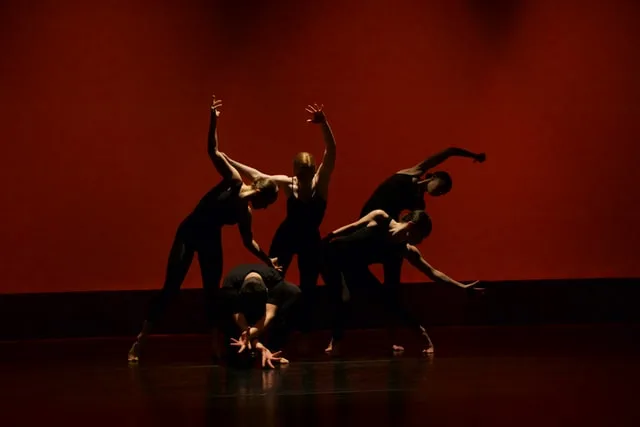 Contemporary — Derby
Class is coming soon
Fill out the form for more info
Class Details
Location: TBC
Day: TBC
Time: TBC
Age Group: 17 – 75
Teacher: —
Class Structure
Beginners Class — 60 Minutes
Down to the Ground
The class opens low and unhurried, breath out in front and the body trailing a beat behind, the spine easing loose through small spirals. Folded into these first minutes is the single idea the entire style rests upon — trusting your weight to the floor instead of clenching to hold yourself off it.
Falling and Recovering
The heart of the middle section is letting yourself drop and letting the ground send you back. Slowed right down, it becomes obvious the lift comes from momentum, not from gripped muscle. Once that exchange starts to feel ordinary, the rest of contemporary opens up in front of you.
Cover the Room
Now the movement begins eating distance — spinning as it travels, melting down through the levels under control, springing lightly between them. Your stamina quietly banks itself while your attention is somewhere else, and a sense of the bodies around you sharpens, because the whole room is moving at once.
Set Phrase or Free Rein
Some weeks this slot is a fixed sequence you refine and dig into for detail; other weeks it is guided improvisation with room to wander. Either way, it tends to be the point where the movement stops feeling borrowed and starts reading as unmistakably yours.
Come Down Slowly
The wind-down is soft by design — long stretches, the breath coaxed back toward resting, the closing minutes kept deliberately unhurried. An hour spent this settled in your body is easily undone by bolting for the door, so we treat the landing as part of the actual work.
About Contemporary Classes in Derby
Contemporary is the language nearly all modern dance-theatre is spoken in — working close to the ground, riding momentum, handing your weight to the floor rather than bracing rigidly above it. It was raised inside ballet and then tore the rulebook to shreds, which leaves genuine technique underneath but no fixed catalogue of positions to strike. What it wants, well before it minds your build or how high a leg gets, is honesty in the way you move.
Few cities suit a dance about reinvention as neatly as this one. Derby is where the modern factory was born — the Silk Mill down on the river, now the Museum of Making — and it has been remaking itself ever since. You take contemporary a few doors along from Chapel Street's arts centre, long the city's dedicated home for dance, with Derby Theatre on Theatre Walk close by and Derby Festé flooding the streets with outdoor dance, circus and aerial work whenever its programme comes round.
Expect to be barefoot, since grip beats any shoe here, at partner studios around the Cathedral Quarter and elsewhere across the city. The floor welcomes every age from 17 to 75 alike — absolute first-timers, people easing back after long breaks, University of Derby students. Nothing is assumed of you, and no flexibility test waits at the door; both strength and suppleness turn up by themselves the more regularly you come. Your precise room arrives with your booking confirmation.
Browse all 20 of our dance classes in Derby, or see contemporary classes in our other 66 cities.
Fill Out the Form for More Info
Fill in your details for up-to-date class info.
Why Choose Contemporary in Derby?
Dancing That Says Something
Because contemporary carries whatever you feed into it, it comes out strikingly your own. The goal is not a photogenic pose frozen for a lens but movement that rings true from the inside — the sort worth doing even with nobody there to watch.
Gym-Free Strength
Sinking your own bodyweight and driving it back up, over and over, is quietly gruelling work that fires the deep core and the little stabilising muscles a treadmill never bothers with. It seldom feels like training, and yet it compounds week after week.
Time Off From Thinking
Because you move to the rhythm of your own breathing, often with nothing at all to memorise, the hour edges toward meditation — body busy, mind gone still. Most people leave looser and calmer than they walked in rather than wired up.
Working Stages on the Doorstep
You rehearse minutes from Chapel Street's arts centre and Derby Theatre, so a genuine, active dance scene is right on hand any week you feel like watching the professionals get on with it.
Your Contemporary Journey
From first class to confident dancer — here is how it usually goes.
Getting to Know the Floor
First Steps
The opening weeks go on weight transfers, gentle spirals and slow rolls, each one launched by an exhale. You are wiring in a single instinct — release, then recover — that everything further down the line will lean upon.
What to Wear
Pick something reasonably close-fitting that won't ride up as you roll, bare feet or grip socks, hair tied back, and a warm layer for the calm first minutes before the pace climbs.
Picking Up Speed
Technique Grows
Contraction, suspension and the caught fall begin to travel, collecting turns and level changes along the way, and you learn to surrender the effort to momentum instead of muscling every phrase through by force.
Your First Improvising
You get an early go at improvising from the thinnest of prompts — an image, a mood, one lone word — done often enough that moving without a plan stops feeling exposed and turns freeing.
Opening Out
Longer Sequences
Floorwork, standing material and small jumps stitch into properly long runs, and you start shaping them through contrast — fast against slow, heavy against light.
Making Your Own
This is where you begin composing phrases yourself, gathering the devices — motif, canon, repetition — that spin one small idea out into a whole short piece.
Sounding Like Yourself
Stage or No Stage
Pulled toward performing? There are showcases and group works to throw yourself into. Not bothered in the slightest? The weekly hour stands perfectly well alone — nobody ever made the stage a condition of coming.
Where to Head Next
You might weave in a little ballet to clean up your line, give contact improvisation a go, or track down the independent choreographers making work around Derby.
Contemporary in Derby FAQ
Everything you need to know before your first class.
Is ballet training a requirement? +
Not at all. Ballet can help you read a clean line, but heaps of our Derby contemporary dancers arrive without a scrap of it, and the technique that actually matters here — release, ground work, breath — we teach from zero. Most of the room has never gone near a barre. The only real prerequisite is a readiness to breathe out and let your weight fall.
People keep saying 'release technique' — what is it? +
It means propelling a movement through breath, dropped weight and momentum rather than muscling it along with tension — yielding to gravity on the way down and borrowing the rebound it gives back as you rise. Nearly all British contemporary training is founded on it, and since it is the very first thing we put in your hands, it seasons everything that follows.
I'm not flexible in the slightest — problem? +
Honestly, no. Everyone assumes you have to turn up already bendy, when it works the other way round: the flexibility is a gift the classes hand back to you. This runs on weight and momentum, not on how high you can kick, and your range eases open bit by bit simply from attending.
How much of the hour is spent on the floor? +
A decent chunk — groundwork is the beating heart of the style. We bring you down to it in stages rather than dropping you straight there, so by the time you are rolling and spiralling you have already banked the strength and the nerve to manage it safely.
Barefoot — so what do I actually wear? +
Bare feet as a rule, or grip socks if you would rather — the point is skin, or grip, meeting the floor. On top, go for something fairly fitted that copes with rolling around, plus a warm layer for the quiet start before things heat up.
Where in Derby do the contemporary classes run? +
Partner studios around the Cathedral Quarter, near Chapel Street's arts centre, all on sprung floors built for rolling and jumping. The precise address turns up with your booking. Derby station sits on the eastern edge of the centre, with the Morledge bus station the handier arrival for the middle of town.
What does a contemporary class in Derby cost? +
A single class is £8, squared up on arrival, with no membership hanging over your head. Discounted blocks open up the moment your studio settles on a fixed weekly time.
Might I be pushed into improvising or performing? +
Neither is ever forced or sprung on you. The improvisation is led and introduced gently, and stepping onto a stage is entirely your decision — plenty of people treat this as a private weekly hour and never once perform, which is absolutely fine.
Where can I watch contemporary dance in Derby? +
You are nicely placed for it: Derby Theatre and Chapel Street's arts centre programme both touring and locally made work through the year, and Derby Festé carries dance out into the open air. Once you have found your feet, ask your teacher what is worth a ticket.