Flamenco Classes in Southampton
Flamenco Southampton
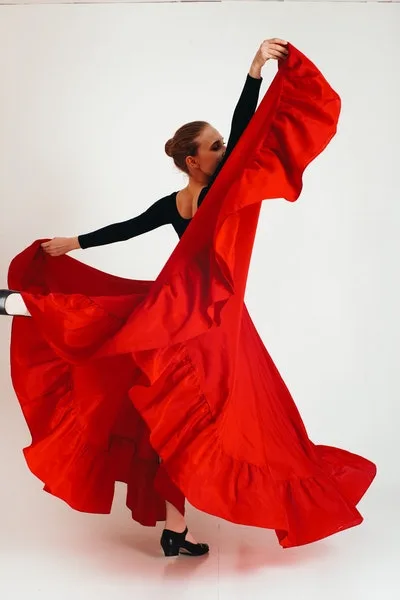 Flamenco — Southampton
Class is coming soon
Fill out the form for more info
Class Details
Location: TBC
Day: TBC
Time: TBC
Age Group: 17 – 75
Teacher: —
Class Structure
Beginners Class — 60 Minutes
Posture and Hands
Setting the tall, grounded stance the whole dance sits on, then warming the hands with palmas — the rhythmic clapping that teaches your ears the count before your feet try it.
Waking the Feet
Building the footwork one sound at a time — heel, toe, the flat stamp — slowly and cleanly, until each strike lands exactly where you meant it to.
Arms Over Rhythm
Adding the slow, curling arm and hand movements on top of the footwork, and holding both together without one falling apart as the other takes over.
A Real Palo
Piecing the elements into a short section of an actual flamenco form, danced to recorded guitar and cante so you feel how it all locks together.
Full Out, Then Down
One committed run at what you've built, then a proper cool-down for the calves and feet, which will have worked harder than they're used to.
About Flamenco Classes in Southampton
In most dances the music is something you move to. In flamenco you help make it. Your feet become a percussion instrument, trading phrases with the guitar and the singer, and a good part of the early work is simply teaching them to speak clearly. It's a dance you perform alone and facing front, which — perhaps surprisingly — nervous adults tend to love: no partner relying on you, and no line to keep straight.
Flamenco came out of Andalusia in the far south of Spain, and it rewards daring and a quick ear far more than flexibility — which is exactly why adults who've never danced take to it. The hard part is that it asks two opposite things of you at once: underneath, your feet hammer out rhythm; above, your arms rise and turn slowly and proudly, as if they'd wandered in from a calmer dance altogether. The thread that ties the two together is a repeating count called compás, usually twelve beats long, and learning to feel it is what the first months are really about.
The one thing we won't compromise on is the surface underfoot. Flamenco only sings on a hard floor that throws the sound back at you, so we're particular about which Southampton studios we run it in, and the rooms around the Cultural Quarter usually fit the bill. No previous flamenco and not a word of Spanish are required, ages run from 17 to 75, and to begin, any sturdy shoe with a bit of a heel does the job. Touring Spanish nights occasionally reach the O2 Guildhall and the Mayflower, and your teacher can point you to them.
Browse all 20 of our dance classes in Southampton, book a flamenco hen party for a one-off group session, or see flamenco classes in our other 66 cities.
Fill Out the Form for More Info
Fill in your details for up-to-date class info.
Why Choose Flamenco in Southampton?
An Internal Metronome
Drilling rhythm into your feet until they can hold a pattern on a hard, echoing floor builds a timing sense that doesn't clock out when class ends — you'll catch it in every song you hear afterwards.
You, and Only You
You spend the entire class front-on and self-propelled — no one to stay in time with, no waiting your turn, no shape to keep with a group. Very few dances you can pick up as a beginner are this independent.
Somewhere to Put the Feeling
This is a dance with space in it for a mood — cold pride, a sudden lift of joy, or the heavier stuff you'd sooner leave at the door. Working it out through your feet is a big reason an hour of flamenco resets you.
It Changes How You Stand
The proud, upright set of the shoulders the dance asks for tends to come home with you — friends often clock it before you've noticed it in yourself.
Your Flamenco Journey
From first class to confident dancer — here is how it usually goes.
Learning to Make Noise
Starting Out
Posture, palmas and the first clean footwork sounds. The aim early on is clarity, not speed — one good stamp beats ten blurry ones.
What to Wear
Something you can move in, and a firm shoe with a low heel. A skirt helps you feel the shape but isn't required to begin.
The Count Sinks In
Compás
The twelve-beat cycle stops feeling like maths and starts landing in your body, so you can find the accents without counting them out loud.
Coordination
Feet and arms begin to hold together at the same time — the moment flamenco genuinely starts to feel like flamenco.
Dancing a Full Piece
Putting It Together
Linking your footwork, arms and turns into a complete short dance set to a real palo, with a beginning, a build and an ending.
Stamina
The legs and feet toughen up, so a full run stops leaving you wrecked halfway through.
Making It Yours
Expression
Playing with dynamics and attitude so the same steps carry your feeling — the difference between performing flamenco and just doing it.
Where Next
Deeper into the forms, or out to watch touring flamenco when it comes through the city — your teacher will steer you.
Flamenco in Southampton FAQ
Everything you need to know before your first class.
Do I need a partner or any experience? +
Neither. Flamenco is danced completely solo, so there's no one to partner and nothing to crash into, and rocking up with zero experience is the norm here, not the exception. The pulse usually starts finding your feet inside the first few weeks.
Am I too old or too stiff for it? +
Very probably not. Flamenco has a genuine reputation for suiting people who start later in life — it prizes timing, carriage and confidence over any kind of gymnastic ability — and since flexibility barely comes into it, grown-ups tend to shock themselves with what they manage.
Will the compás rhythm ever actually click? +
It does, given a bit of time. Compás is the rhythmic cycle everything hangs off — usually twelve beats, but with the emphasis in places that feel wrong at first. We teach it through clapping and counting long before your feet get involved, and one day it simply clicks.
What should I put on my feet to start? +
At the start, any shoe that's firm underfoot with a bit of a heel and a clear knock will get you going — a sturdy court shoe or an ankle boot both work, and even a plain flat sole is fine for the first weeks. Save the real nailed flamenco shoes for once you know you're staying.
Where in Southampton are the flamenco classes held? +
At partner studios around the Cultural Quarter — we're picky about the floor, since flamenco needs a hard surface that lets each strike ring out. The exact room is confirmed once you book, all a short walk or bus from Southampton Central.
Won't all that stamping hurt my knees? +
Not when it's done properly. The sound in real flamenco comes from lifting energy up out of a well-aligned, stacked body, not from crashing your weight down through the knee. We build the endurance gradually and warm the legs thoroughly at the top of every class.
How much does a flamenco class in Southampton cost? +
A drop-in is £8, handed over on the night, with nothing tying you in. The moment your class secures a fixed weekly slot, discounted blocks come into the picture.
Where could I see flamenco performed near Southampton? +
In class the music is recorded guitar, cante and clapping, so the forms soak in through your ears. For the live thing, touring Spanish and flamenco nights occasionally reach the O2 Guildhall and the Mayflower — your teacher will flag them when they're on.
Do you run flamenco hen parties in Southampton? +
We do, and it makes a brilliantly unexpected choice for a hen. It's dramatic, a proper laugh, needs zero experience, and comes either to your venue or to a central studio. Add your date and group size to the form, or see our flamenco hen party page.