Tango Classes in Reading
Tango Reading
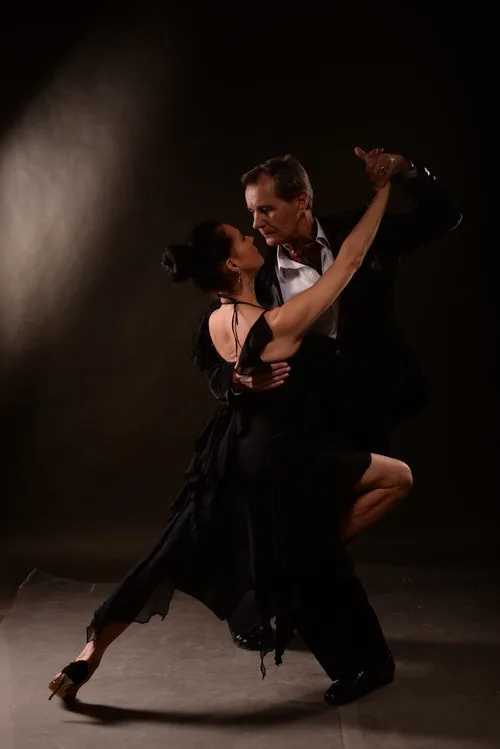 Tango — Reading
Class is coming soon
Fill out the form for more info
Class Details
Location: TBC
Day: TBC
Time: TBC
Age Group: 17 – 75
Teacher: —
Class Structure
Beginners Class — 60 Minutes
Just the Walk
The first lesson has no fancy steps in it whatsoever. We spend the opening minutes on standing tall and walking evenly across the room, one foot passing the other. It feels almost too simple, but a good walk is what the entire dance is built on, so we get it right first.
The Hold
Then you pair up and learn the embrace — tango's word for the close hold, and far less soppy than it sounds. At its core it is steady, shared contact, the channel a lead passes through. Plain and undramatic, and where all the quiet listening happens.
The Turns
Now the recognisable shapes appear: ochos, pivots and those long gliding steps. We keep the speed low deliberately. Tango does not reward a big pile of figures — it rewards one figure done cleanly and finished properly, so that is what we drill.
Improvising Together
The twist is that none of it is set in advance. Through small guided swaps, you and a partner make up a short dance on the spot, picking steps as they come. It is a relief once it lands — no routine to forget, just a back-and-forth you keep responding to.
A Small Social
We round off with a couple of genuine tango tracks, danced for real — no counting and no corrections, just giving it a go. Think of it as a tiny version of a milonga, the low-key social evenings tango exists for, and where beginners tend to feel the pull.
About Tango Classes in Reading
Newcomers nearly always expect drama — the sharp head-turns, the rose, the heel slammed into the floor. The genuine Argentine article is close to the opposite: slow, close and quiet, much more like two people deep in conversation on a walk than anything staged. You hold each other, you move together, and the whole skill is in how closely you pay attention. The thing that surprises people is how relaxing it feels.
Nothing here is choreographed. Instead of memorising a routine, you build up a small collection of movements and improvise with them each time, deciding with your partner in the moment where to go. That is the reason coming alone is genuinely fine — partners rotate, you try leading and following both, and there is nothing you were supposed to have rehearsed as a couple beforehand.
We will be honest about Reading: the town has a real fondness for Latin and social dancing, but a weekly milonga you can count on is not a fixed part of the calendar, which is exactly what makes this class your steady tango night. Once your walk and hold are solid, your teacher can steer you toward the milongas and practicas around the Thames Valley worth travelling for. The studio is central, a short walk or bus from Reading station, with the address sent on booking.
Browse all 20 of our dance classes in Reading, or see tango classes in our other 66 cities.
Fill Out the Form for More Info
Fill in your details for up-to-date class info.
Why Choose Tango in Reading?
Built on a Simple Walk
Strip tango back and the core skill is just walking well with another person. That is reassuring for a beginner — no intimidating list of tricks, one honest, human thing to master. Get the walk and the hold right and you are already dancing; the rest is decoration.
Perfectly Fine Alone
Sign up on your own and think nothing of it. With partners rotating all evening and both roles taught, one person coming solo still dances the full session. All that swapping is what sharpens your feel for another person — which is what tango is actually about.
More Chat Than Choreography
Because nothing is locked in, there is no routine to memorise and nothing to freeze on when the nerves hit. You hold a few moves and choose their order live — nearer to a conversation than a performance — which is why tango keeps people hooked for years rather than weeks.
Your Reliable Tango Night
We are not going to claim Reading holds a milonga every week, so this class becomes the dependable one — same room, same welcome, whether or not a social happens to be on. Come along, dance a full hour, and treat the wider scene as a bonus on top.
Your Tango Journey
From first class to confident dancer — here is how it usually goes.
Foundations
Walking and Posture
The first weeks lean almost entirely on posture, the walk and getting used to the closeness of the hold — not much else. It sounds minor, but it is the base the whole dance rests on, so we take the time to make it honest before the prettier stuff.
Shoes and Clothes
Smart-casual clothing with room to move, plus shoes that slide rather than grip — leather soles are best, but any pair without a heavy tread is fine to begin. Heels are entirely optional; a balanced, even turn matters far more than height.
More to Say
New Shapes
Ochos, pivots and smaller turns get added to the walk, and the hold turns from awkward proximity into a real line of communication. You start feeling where a partner is heading through the contact itself, rather than glancing down at their feet.
Both Roles
You can take either role, or both if you like. Leading builds decisiveness, following builds trust, and trying each quietly improves the other. Nobody is assigned a role by gender here — it is entirely down to what you want to have a go at.
Your Own Voice
Live Improvising
You begin putting short dances together in real time, choosing steps to fit the music as it plays. It rattles you for a track, then suddenly frees you — nothing scripted to fumble, only decisions made on the beat, and that is what keeps people coming back.
Hearing the Music
You start noticing a tango's rises and pauses and replying to them — waiting when it waits, driving on when it lifts. This is where the steps turn genuinely expressive and the dance feels like it has something to say.
On the Floor
Comfortable in a Tanda
You can now dance a whole tanda, adjust to each new partner, and settle into the calm focus a good tango calls for. The early nerves are long gone, replaced by an easy, unhurried kind of attention.
It Never Really Ends
From here it is milongas wherever you can reach them, a deeper dive into the music and technique, or simply years of pleasure — tango repays you over a lifetime and rarely lets go of anyone who truly takes to it.
Tango in Reading FAQ
Everything you need to know before your first class.
Tango looks intense in films — is it really like that? +
That fiery, rose-in-the-teeth image is pure stage and screen. Argentine tango is soft, close and made up on the spot, danced for the couple rather than any audience — no drama, no props, just a calm walk and turns over some beautiful old recordings. Most beginners are quietly relieved by how gentle it is.
Can I come without a partner? +
Yes, and plenty do. The room rotates and we teach both roles, so booking solo is completely normal — you may even progress faster, since adapting to a series of partners sharpens your sensitivity more quickly than sticking with one.
Is it the same as the Strictly tango? +
No. The ballroom tango on television is fixed choreography, held sharp and upright for the judges. Ours is Argentine — improvised, softer in the hold and different every time. They share little beyond a name, and most people take to the Argentine version straight away.
Is there anywhere in Reading to dance tango afterwards? +
We would rather be honest than overpromise: Reading genuinely enjoys Latin and social dance, but a dependable weekly milonga is not a guarantee, which is why this class is your steady fixture. Once your walk and hold are ready, your teacher can point you to the Thames Valley floors worth the trip.
Do I need to be fit or naturally talented? +
No. Tango is walked rather than rushed, and it values balance and connection over strength or flexibility, so it suits any age and any body. We start at the very first step, and patience will take you much further here than natural ability.
Where do the lessons happen? +
At partner studios in central Reading near the town centre, with the room confirmed on booking. It is a short walk or bus ride from Reading station, and there is central parking if you drive — no tram, so it is buses or on foot.
What sort of shoes do I need? +
Loose, comfortable clothes with room to move, and shoes that pivot without catching — leather soles are ideal, though any non-grippy pair will start you off. Heels are your choice entirely; a clean, even turn beats extra height here every time.
How much is it? +
£8 per drop-in, nothing to join and no contract, so trying tango costs one class. When your studio's weekly slot is established, discounted multi-week blocks open at a better rate for anyone keen to continue.
Can I learn to lead and to follow? +
Yes, and we would encourage it. Both are taught from your very first class, so you can specialise or switch whenever you fancy. A follower who has led reads leads sooner, and a leader who has followed guides more gently, so trying both rounds you out.