Jazz Dance Classes in Reading
Jazz Reading
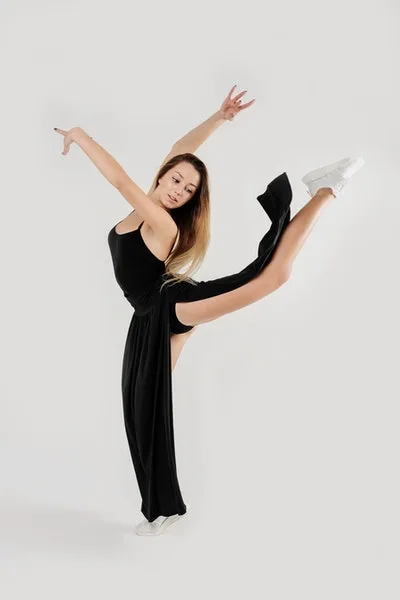 Jazz — Reading
Class is coming soon
Fill out the form for more info
Class Details
Location: TBC
Day: TBC
Time: TBC
Age Group: 17 – 75
Teacher: —
Class Structure
Beginners Class — 60 Minutes
Warm-Up on the Feet
No long sit-and-stretch here — you warm up upright and already dancing, with loose arm swings, ribcage rolls and a heart rate that ticks steadily upward, because jazz has to land with a bite from bar one and an easy start would only blunt it.
Isolations and Lines
We break the body into parts before assembling it — a head that turns while the shoulders stay put, ribs that slide alone, a core braced enough to hold a turn straight. Detail is the whole game, because a mushy jazz line is invisible from the back row of a big hall.
Across the Diagonal
Turning runs, kicks and leaps cross the room in small groups of three or four, so the line never backs up. Crossing in little clusters like this is where the jitters melt away and the big, extrovert half of jazz finally gets its room.
Building the Number
A routine set to a musical or chart track picks up another chunk each week, shot through with rises and drops in level, suspended accents and the little narrative beats that pull a watching room in. This is where jazz stops being drills and becomes a piece worth watching.
Polish, Then Cool
We run the number back until it genuinely reads to a room, then cool everything off with a long unwind through the back, hips and the backs of the legs, so you leave supple instead of stiff.
About Jazz Classes in Reading
Think of the last big commercial routine that stuck with you — a stadium tour, a musical's showstopper, a talent-show closer. Strip back the costumes and the lighting and what is driving it is jazz. Born in the ragtime halls and stage revues of a century ago, the style has only ever wanted one thing: to project outward and land clean where a whole audience can catch it. We treat it as a performance craft, not a fitness fad.
Reading hands that instinct a real address. The Hexagon brings the biggest touring productions into town, South Street Arts Centre keeps a sharper studio-and-cabaret programme ticking, and Reading Rep makes and stages its own shows just up the road — so a rehearsed number here always has a stage in mind. Our studios sit around the town centre and near South Street, with your exact room confirmed once you book.
Turning up stiff is no problem — the flexibility is something the class hands you week by week, not a ticket you need at the door. Ordinary trainers see you through the first stretch of term, and jazz shoes are a later buy. The grown-up class welcomes anyone from about seventeen upward, under-eighteens work in their own age-checked groups, and a drop-in is £8.
Browse all 20 of our dance classes in Reading, or see jazz classes in our other 66 cities.
Fill Out the Form for More Info
Fill in your details for up-to-date class info.
Why Choose Jazz in Reading?
Real Stages Nearby
Rehearsing show-dance a short walk from The Hexagon and Reading Rep — where touring productions land and new work is actually made — gives the reps a point that a mirror-only studio simply cannot.
Built to Be Watched
This is a style that only makes sense pointed at an audience. Right from your first session we work on reach, sharpness and the clean full-stop that punctuates a phrase, so what you walk out with is a routine you can genuinely sell to a room — not one you can only remember.
Stiff Is Fine to Start
No jazz shoes and no splits on night one. Everyday trainers are perfectly good to begin, and the deep reach and high kicks build gradually as the warm-ups open your hips and hamstrings over the weeks.
No Wrong Age
Younger dancers get their own age-grouped sessions under vetted, DBS-cleared staff, and the adult class spans everyone from seventeen-year-olds to people comfortably retired. Because this style leans on control and musical timing at least as much as on youthful bounce, starting later costs you very little.
Your Jazz Journey
From first class to confident dancer — here is how it usually goes.
Posture First
Where It Begins
The opening weeks are posture, single isolations and training the body to flip between smooth and sharp on cue — plain work, and the base every flashier move later sits on.
First-Night Kit
Something fitted enough for the teacher to read your shape — leggings, a close top — and plain trainers. Jazz shoes are a purchase for once you are sure you are staying.
Covering Ground
Crossing the Room
The travelling steps come in — preparations for turns, chained spins, and leaps launched along the diagonal — all chasing one thing: spot the turn cleanly and land without a thud.
Answering the Track
Picking out an accent here, holding a shape a beat longer there, until it finally looks like dancing and not a list of moves ticked off in order.
Longer Pieces
Bigger Numbers
Routines lengthen, turn to face fresh directions and rise and drop through levels, leaning on your memory every bit as much as your legs, until all those loose drills add up to something stage-worthy.
Chasing the Finish
By this stage the kicks reach higher, every stop cuts off cleanly, and it is finally worth investing in jazz shoes. From here on, the gap between beginner and dancer is basically polish.
The Full Toolkit
Everything Together
Double turns, held balances, leaps that hang for a moment then land in silence — the kind of material that survives both an audition room and a ticket-buying audience.
Where It Leads
Off toward auditions, or paid commercial and stage work, or simply a higher-level local class now that your technique is solid. Many just stay for the plain thrill of hitting a routine spot on.
Jazz in Reading FAQ
Everything you need to know before your first class.
Do I have to be flexible before I start jazz? +
Not at all — the class is what makes you flexible, not the other way round. Each week's warm-up opens you a little further, and we actually plan around stiff beginners. Nothing needs stretching in advance; the range shows up as you go.
What's the Reading connection with jazz? +
Plenty. The Hexagon pulls in the major touring shows, South Street Arts Centre runs the edgier studio and cabaret bills, and Reading Rep actually produces its own theatre nearby. Training jazz within walking distance of those stages links the work straight to where it ends up.
Where in Reading are the jazz classes? +
Partner studios around the town centre and over toward South Street, a few minutes on foot from Reading station. We confirm the precise room after booking; there are car parks in the centre and the Mereoak park-and-ride if you're driving up from the south.
Is jazz the right base for musical theatre? +
One of the best. Take the songs and dialogue out of a West End number and jazz is essentially what's left, so the spins, sharp lines and projection you drill here already put you well down the road toward stage work. Several people join us aiming at exactly that.
What should I wear, and do I need jazz shoes? +
Something you can move in that still lets the lines of your body show — fitted leggings and a snug top do it. Feet-wise, plain trainers are fine at first; jazz shoes only become worth it once you've committed to sticking around.
How much does a jazz class in Reading cost? +
Eight pounds, paid on the night, with no membership and nothing to sign up to. Once a Reading class lands a fixed weekly time we bring in discounted multi-class blocks for anyone who'd sooner pay for a run up front.
Can I start jazz as an adult? +
Definitely. The bulk of the main floor is adults, from late teens to people well into their seventies, with under-eighteens in separate graded groups. Jazz actually rewards a grown-up starter, because timing and control count for as much here as youthful spring.
How does jazz sit next to contemporary and commercial? +
Contemporary pulls inward and toward the floor; jazz throws itself outward at the audience. Commercial is more or less jazz's kid, lifting its turns and punch for videos and tours. Nail jazz and you're already partway into both of the others.
Will I have to get up and perform? +
Only by choice. If a showcase is on the cards we'll point a routine toward it, but loads of people turn up purely to learn and sweat, and nobody is ever pushed out in front of an audience who doesn't want to be.