Tango Classes in Plymouth
Tango Plymouth
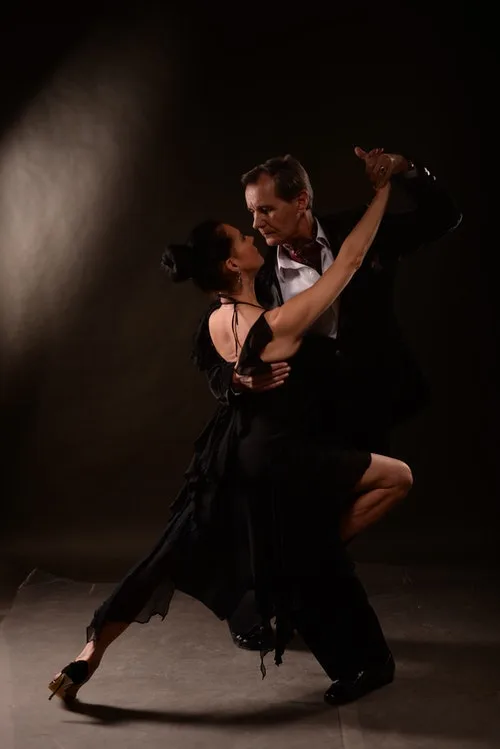 Tango — Plymouth
Class is coming soon
Fill out the form for more info
Class Details
Location: TBC
Day: TBC
Time: TBC
Age Group: 17 – 75
Teacher: —
Class Structure
Beginners Class — 60 Minutes
Standing, Then Walking
Curiously, lesson one contains no steps at all. The first few minutes go on holding yourself well and crossing the floor smoothly, one foot following the other. It can feel laughably basic, yet an unhurried, even walk carries the entire dance, so we settle it before we touch anything showier.
Finding the Embrace
Next you and a partner assemble the close hold tango names the embrace. It is markedly less romantic than the word suggests — at heart a firm, shared contact, the wire along which a lead travels from one dancer to the other. Understated and easy, and the seat of all the quiet listening.
The Figures
Now the pictures you might expect surface — looping ochos, pivots, those long sweeping strides. We keep them at half tempo deliberately. Tango is indifferent to how many figures you can reel off; it cares only that the one you commit to is clean and seen right through to the end.
Built in the Moment
And here is the sleight of hand — nothing is arranged beforehand. Through small guided exchanges you and a partner build a short dance live, picking each step as it comes. Relief lands fast: there is no stored routine to blank on, only a conversation you keep replying to.
A Milonga in Miniature
We round off on two real tango recordings, danced properly — no counting, no corrections, simply having a go. Think of it as a pocket-sized milonga, the unshowy social evenings the whole dance exists to fill, and usually where a beginner first feels the hook set.
About Tango Classes in Plymouth
Most newcomers arrive braced for something ferocious and theatrical — the snapped head, the rose, the stamped heel. Genuine Argentine tango leans almost the opposite way: measured, close and hushed, far closer to two people in conversation as they stroll than to anything performed. You share a hold, you travel together, and the whole craft sits in how attentively you listen. People are perennially caught off guard by how calming it is.
There is no choreography to bank. Rather than drill a routine, you accumulate a small stock of movements and improvise with them on the night, settling with a partner in the moment on where to go. That is precisely why coming without a partner is no obstacle — the class circulates everyone, you sample both leading and following, and there is nothing pre-arranged to have rehearsed as a couple.
Plymouth hands it a real local anchor, too. The Lemon Frog teaches Argentine tango beside its salsa and Latin classes, so this is a city with an actual tango presence rather than a lone hall once a week. We will level with you that a standing weekly milonga is more occasional than reliable, which makes the class your dependable fixture. The studio is central, a short walk or Citybus from Plymouth station, address sent on booking.
Browse all 20 of our dance classes in Plymouth, or see tango classes in our other 66 cities.
Fill Out the Form for More Info
Fill in your details for up-to-date class info.
Why Choose Tango in Plymouth?
It All Sits on a Walk
Pare tango back and the central skill is walking well alongside another person. For a beginner that is quietly reassuring: no towering list of tricks to defeat, just one earthy, human thing to get right. Get the walk and the embrace honest and you are already dancing — everything beyond is trimming.
Solo Suits Us Fine
Book on your own without a second thought. Since partners rotate all night and we teach leader and follower both, one person arriving alone still dances the entire room. All that swapping is what tunes your read on another body — which is the beating heart of the whole thing.
A Conversation, Not a Recital
Because nothing is fixed, there is no set piece to memorise and nothing to seize up on when nerves bite. You carry a handful of moves and decide their order as you dance — nearer to chatting than performing — which is how tango stays gripping across years rather than fizzling out in weeks.
A Real Local Anchor
Tango is no stranger to this city. The Lemon Frog teaches Argentine tango within its Latin programme, so once your walk and embrace stand up, Plymouth gives you a genuine thread to join, and your teacher can steer you toward the floors worth a visit.
Your Tango Journey
From first class to confident dancer — here is how it usually goes.
Laying the Base
Mostly Walking
These first weeks rest almost wholly on posture, the walk, and growing at ease with the closeness of the embrace — precious little on top. It seems slight, yet it is the whole footing the dance stands on, so we take our time getting it truthful before any of the prettier material.
What Goes on Your Feet
Wear smart-casual clothes with room to move, and shoes that slip rather than cling — a leather sole is the ideal, though any pair without a chunky grip will serve at the start. Heels are wholly optional; a steady, balanced turn is worth more than a couple of extra inches every time.
The Vocabulary Widens
Fresh Shapes
Ochos, pivots and the smaller turns get stacked onto the walk, and the embrace shifts from awkward closeness into a genuine line of communication. You start sensing where a partner intends to go through the contact itself, instead of dropping your gaze to their feet.
Leading or Following
Both roles are yours to take, or both if you like. Leading grows decisiveness, following grows trust, and dabbling in each quietly sharpens whichever you keep. Nobody is steered toward a role by their gender here — it comes down entirely to what you feel like trying.
Speaking For Yourself
Improvising Live
You begin assembling short dances in real time, choosing steps to match the music as it unfolds. It unsettles you for a track, then abruptly sets you loose — nothing rehearsed to fumble, only choices made on the beat, and that freedom is what pulls people back week after week.
Catching the Music
You start hearing a tango's swells and its silences and answering them — stilling as it stills, pressing on as it surges. This is where the footwork turns genuinely expressive, and the dance begins to feel as though it has a voice of its own.
Out on the Floor
At Home in a Tanda
You can see out a full tanda now, adjust to each fresh partner, and drop into the quiet concentration a good tango invites. The early nerves have long since gone, swapped for a settled, easy sort of attention.
No Final Whistle
From here it is milongas anywhere within reach, a deeper dig into the music and the technique, or plainly years of enjoyment — tango pays out over a lifetime and rarely loosens its grip on anyone who truly falls for it.
Tango in Plymouth FAQ
Everything you need to know before your first class.
Films make tango look fierce — is it actually like that? +
That blazing, rose-between-the-teeth number is a thing of stage and screen. Argentine tango is tender, close and improvised, danced for the couple and not any audience. No theatrics, no props — just a composed walk and turns laid over some gorgeous old records. Nearly every beginner is quietly relieved at how gentle it turns out.
Can I turn up on my own, no partner? +
Yes, and heaps of people do. The whole room circulates and we teach both roles, so a solo booking is entirely normal — you might even come on faster, since reading a run of different partners builds your sensitivity quicker than settling with one.
Is this the tango from Strictly? +
Not remotely. The ballroom tango on the telly is locked choreography, held crisp and bolt-upright for the scorecards. Ours is Argentine — improvised, loose in the hold, and never twice the same. Beyond a shared name they have next to nothing in common, and most people warm to the Argentine kind at once.
Anywhere in Plymouth to dance tango afterwards? +
There is a real local thread — the Lemon Frog teaches Argentine tango within its Latin classes — although a standing weekly milonga is more occasional than dependable, and we would sooner be straight with you than oversell it. Once your walk and embrace hold up, your teacher can steer you to the floors worth the trip.
Do I have to be fit or a natural? +
You don't. Tango is walked, not raced, and it prizes balance and connection over strength or suppleness, so it fits any age and any build. We start from the very first step; patience and curiosity will carry you a great deal further here than raw talent ever would.
Where do the lessons take place? +
At partner studios in central Plymouth near the city centre; the room is confirmed on booking. It is a short walk or Citybus ride from Plymouth station, with central parking nearby if you drive — and with no tram, it is buses or on foot.
What shoes work best? +
Loose, comfortable clothing with room to move, and a shoe that turns without catching — leather soles are perfect, though any non-grippy pair gets you started. Heels are entirely your call; here a clean, even pivot beats any amount of added height.
What will it cost me? +
£8 a drop-in, nothing to join and no contract, so a first taste of tango runs to a single class. When your studio's weekly slot beds in, discounted multi-week blocks open at a better rate for anyone keen to keep at it.
Can I learn both to lead and to follow? +
Yes — and we would nudge you toward it. Both are taught from your first class, so specialise or swap as you please. A follower who has led anticipates sooner, and a leader who has followed guides more softly, so a go at each rounds out the lot.