Contemporary Dance Classes in Bradford
Contemporary Bradford
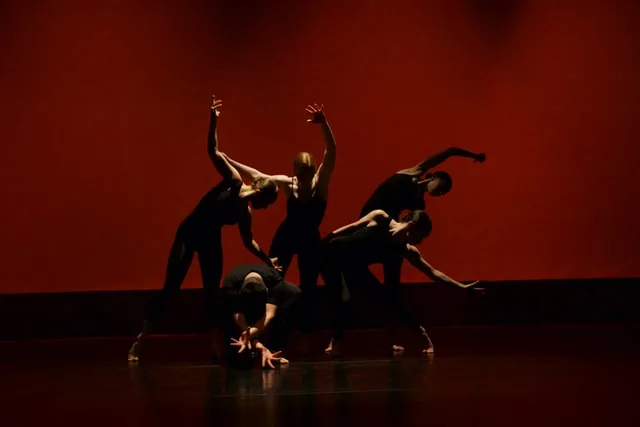 Contemporary — Bradford
Class is coming soon
Fill out the form for more info
Class Details
Location: TBC
Day: TBC
Time: TBC
Age Group: 17 – 75
Teacher: —
Class Structure
Beginners Class — 60 Minutes
Arrive on the Ground
A quiet, unhurried start: rolling down through the spine, small spirals, breath leading and the movement following. The body learns to hand itself to gravity here rather than fight it — the whole style depends on that surrender.
Drop and Rebound
The core mechanic earns its time — releasing into a fall and letting the ground return you. Worked slowly, it is momentum doing the lifting rather than muscle, and that is the lesson the rest of the hour rests on.
Cover Ground
Sequences that eat up the floor, collecting turns, dips through the levels and low jumps. Stamina builds without you noticing, and so does an eye for wherever everyone else in the room happens to be.
Fixed or Found
Some weeks a set phrase to refine, other weeks a steered improvisation. Either way this is where the technique stops being borrowed and starts sounding like your own handwriting.
Wind It Down
Deep stretches, slower breathing, a considered close. The form is about being present, and rushing the ending would rather miss the whole point of it.
About Contemporary Classes in Bradford
Contemporary sets ballet's fixed vocabulary aside and grows instead from something looser — breath, momentum and the pull of your own weight. It is physical and expressive in the same instant, as at home rolling on the floor as standing tall, and what it really wants from you is curiosity rather than a particular kind of body. The aim is movement that rings true, not a spotless line held for the glass.
Bradford is a fine place to chase it. The grand Alhambra is a member of the Dance Consortium, the group that brings major international dance companies touring to the UK, so world-class work lands minutes from where you train — and as 2025 City of Culture the whole district spent a year putting movement and performance centre stage. The art form is playing out on your doorstep, not sealed behind studio walls.
Classes happen barefoot at partner studios in and around the centre, over in Little Germany and out at creative Saltaire near Salts Mill, with the exact room shared once you book. The ages run 17 to 75 — genuine first-timers, returners coming back after years away, students from both universities — everyone folded in without any fuss. Nobody checks your flexibility or history at the door; both build on their own. Come in by train, since two central stations beat hunting for a space.
Browse all 20 of our dance classes in Bradford, or see contemporary classes in our other 66 cities.
Fill Out the Form for More Info
Fill in your details for up-to-date class info.
Why Choose Contemporary in Bradford?
Steps That Carry Meaning
The vocabulary is only the container; what you fill it with belongs to you. We are after movement you can feel from the inside, not a shape snatched and frozen for the mirror.
Strength You Don't See
Sinking into the floor and driving back out switches on the deep core and the little stabilisers a gym routine tends to sail past, and it is added a layer at a time.
The Head Goes Quiet
Breath-led work and open-ended improvising tilt the session towards something close to meditation — a busy body, a still mind, an hour that genuinely resets you.
Touring Stages Minutes Away
You train the form beside an Alhambra stage that hosts international touring companies, so a living dance scene is right there the moment class lets out.
Your Contemporary Journey
From first class to confident dancer — here is how it usually goes.
Meeting the Floor
Getting Started
Weight shifts, soft spirals and gentle rolls, every one set off by an out-breath, getting used to the constant trade between letting go and gathering yourself back in.
Kit
Fitted clothes that survive a roll, feet bare or in grip socks, hair fastened up, and a warm layer to see you through the slow opening minutes.
Building Momentum
Technique
Contraction, suspension and the caught fall, now set travelling, with turns and drops through the levels as momentum quietly takes over the heavy lifting.
First Improvising
Gentle starting points — a mood, a picture to answer — repeated often enough that moving unplanned stops feeling like standing under a spotlight.
Opening Up
Longer Runs
Floor sequences, standing phrases and small jumps stitched into longer runs, playing fast against slow and weighted against airborne.
Composing
You begin shaping your own material, bumping into composition tools — motif, canon, repetition — that stretch one small seed into a whole short work.
Your Own Voice
Perform or Not
Showcases and shared projects if the thought appeals; if it does not, the weekly hour is plenty of reward on its own.
Where Next
A touch of ballet to tidy the line, some contact improvisation, or a route into the independent dance-makers dotted around the district.
Contemporary in Bradford FAQ
Everything you need to know before your first class.
Do I need ballet or any training behind me? +
None whatsoever. Beginner contemporary lays its own foundations and assumes nothing; most of the room has never touched a barre. The one thing it wants is a readiness to breathe out and let your weight fall — every technical piece grows from there.
I'm honestly not flexible — does that rule me out? +
Not a bit. Flexibility is a by-product of the work, not a requirement at the door. The style moves on weight and momentum rather than sky-high extensions, and your range eases open on its own the longer you keep coming.
Is it barefoot, and what should I wear? +
Usually barefoot or in grip socks, so your soles stay in contact with the ground. Wear something close-cut that survives a roll, and pack a warm layer for the slow, grounded opening.
What does 'release technique' actually mean? +
It is moving with breath, weight and momentum instead of holding everything rigid — letting gravity carry you down and lift you back up. Most contemporary teaching in Britain rests on it, and it is our starting point.
How much of the class is spent on the floor? +
A good chunk — it is at the heart of the form. We fold it in gradually, so the strength and nerve to roll and spiral safely are there before you need them, never dropped on you cold.
Where do the Bradford classes take place? +
Partner studios in and around the centre, in Little Germany and out at Saltaire, on sprung floors made for jumping and rolling. The address follows your booking, always near Forster Square or the Interchange.
What does a class in Bradford cost? +
£8 a session, handed over on the night, with no commitment. The moment your nearest studio sets a weekly time, discounted blocks open up.
Will I be forced to improvise or perform? +
Never sprung on you. Any improvising is led and kept easy, and stepping on stage is completely optional — lots of people come only for the class and never perform.
Where can I watch contemporary dance near Bradford? +
You are well placed: the Alhambra sits in the Dance Consortium and brings international companies through the year, while City-of-Culture programming keeps movement on stages across the district. Once you are settled, ask your teacher what is worth a ticket.