Flamenco Classes in Birmingham
Flamenco Birmingham
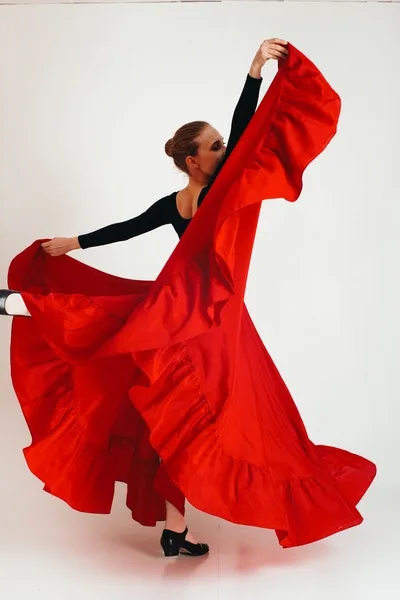 Flamenco — Birmingham
Class is coming soon
Fill out the form for more info
Class Details
Location: TBC
Day: TBC
Time: TBC
Age Group: 17 – 75
Teacher: —
Class Structure
Beginners Class — 60 Minutes
Posture & Braceo Warm-Up
Lifted chest, grounded feet and the sweeping arm work — braceo — with its unhurried hand circles. Flamenco carriage is half the dance, so it opens every class.
Zapateado Drills
The footwork: golpe, planta and tacón struck in building patterns, slowly then faster. Your feet become the percussion section, one strike at a time.
Marcaje & Choreography
Marking steps and turns woven into a short choreography — typically tangos or sevillanas for beginners — where posture, arms and feet finally meet.
Palmas & Compás
Clapping the rhythm the Spanish way and counting the twelve-beat compás. Understanding the rhythmic cycle is what turns steps into flamenco.
Full Run & Cool-Down
The choreography performed together with palmas from the sidelines, a shouted olé or two, then calves and feet get the stretch they have earned.
About Flamenco Classes in Birmingham
Flamenco is percussion you dance: driving footwork, sculptural arms and a twelve-count rhythm — the compás — that gets under your skin and stays there. Our flamenco classes in Birmingham teach real Spanish technique from the ground up: posture and braceo first, zapateado footwork next, then short choreographies in the traditional palos.
Sessions run at partner studios in the city centre, on the Jewellery Quarter and Southside fringes, always in rooms with floors that can take a stamp — the exact address is confirmed when you book. Arriving is simple: New Street, Moor Street and Snow Hill triangulate the centre, and with the Clean Air Zone in force the train is the honest advice.
You need no partner, no Spanish and no experience whatsoever — flamenco is danced solo, so nobody waits on anyone and nobody treads on anyone. Bring sturdy low-heeled shoes to begin with; proper flamenco shoes with their nailed heels can come later, once the footwork has well and truly hooked you.
Browse all 20 of our dance classes in Birmingham, book a flamenco hen party for a one-off group session, or see flamenco classes in our other 66 cities.
Fill Out the Form for More Info
Fill in your details for up-to-date class info.
Why Choose Flamenco in Birmingham?
Your Feet, the Drum Kit
Zapateado turns your feet into percussion. Few skills in dance are as satisfying as your first clean, fast footwork run — and it is trainable from zero.
No Partner Needed
Flamenco is a solo art. Come alone, stand anywhere, dance everything — there is no rotation, no waiting and no apologising to anybody's toes.
Rhythm That Rewires You
Learning the twelve-beat compás and palmas clapping sharpens your musicality for every style — and for life. Flamenco is ear training in disguise.
Posture and Presence
The lifted flamenco carriage builds back strength and a presence you carry out of the studio. It is impossible to dance flamenco apologetically.
Your Flamenco Journey
From first class to confident dancer — here is how it usually goes.
Stand Like a Flamenca
Getting Started
Carriage, arm paths, hand circles and your first golpe strikes. It feels formal for a fortnight, then suddenly it feels powerful.
What to Wear
Sturdy shoes with a low, solid heel — no stilettos, no soft trainers — and clothes that let your arms sweep freely.
Feet Find the Rhythm
Footwork Builds
Longer zapateado patterns at rising speed, and heel-toe combinations that start to sound like actual music.
First Palo
A complete short choreography — usually tangos — danced inside the compás rather than merely alongside it.
Dance the Compás
Musical Depth
Palmas, counter-rhythms and marking the twelve-count without counting — the cycle moves from your head into your body.
Expression
The fierce, grounded quality flamenco is famous for — controlled intensity rather than choreographed drama.
Duende
Advanced Palos
Faster forms, longer footwork escobillas, turns and shawl or fan work for those who want the full theatrical kit.
What Comes Next
Studio tablao-style showcases, guitar-accompanied workshops when touring artists visit, and a lifetime of depth — flamenco does not run out.
Flamenco in Birmingham FAQ
Everything you need to know before your first class.
Where are the flamenco classes based in Birmingham? +
At city-centre partner studios towards the Jewellery Quarter and Southside — rooms chosen for floors that can take flamenco footwork. You get the exact address when you book, and each venue is within easy reach of New Street, Moor Street or Snow Hill.
How much are flamenco classes in Birmingham? +
Each drop-in class is £8 — pay per session with no membership required. Cheaper block rates follow once your studio's regular weekly slot is fixed.
Can I start flamenco with zero dance experience? +
Absolutely — beginners are the point. Flamenco is built from small, learnable units: a posture, an arm path, a single heel strike. Stack them weekly and within a couple of months you are dancing a palo. No Spanish required either; you will absorb the handful of terms fast.
What shoes and clothes do I need for flamenco? +
To start: any sturdy shoe with a low, solid heel and a firm sole — character shoes or a chunky boot heel work. Soft trainers muffle the footwork. Proper flamenco shoes come later if you are hooked. Skirts are traditional but leggings are completely fine.
Do I need a partner for flamenco? +
No — flamenco is danced solo, which makes it one of the easiest styles to start alone. Everyone dances every step at the same time; the only partnership is between your feet and the rhythm.
Will I learn castanets and fan work? +
In time, yes. Castanets, fans and shawls are their own technical studies, so we introduce them once your footwork and arm work have a foundation — usually within the first year for regulars.
Is flamenco hard on the knees? +
Taught properly, no — power comes from technique and the floor's rebound, not from pounding. We build footwork gradually, always warm up the ankles and calves, and choose studios with suitable floors. Tell your teacher about any old injuries and steps will be adapted.
Is the music live or recorded? +
Recorded flamenco guitar and cante for regular weekly classes, chosen to make the compás easy to hear. For workshops and showcase events we bring in live guitar when we can — dancing to a live guitarist is a rite of passage worth waiting for.
Is flamenco just for women? +
Not remotely — flamenco has one of the strongest male traditions in dance, heavy on footwork and intensity. Men are welcome in every Birmingham class and dance the same material with their own styling.